Bones of the Idea: Civilization (1990–1991) in Context
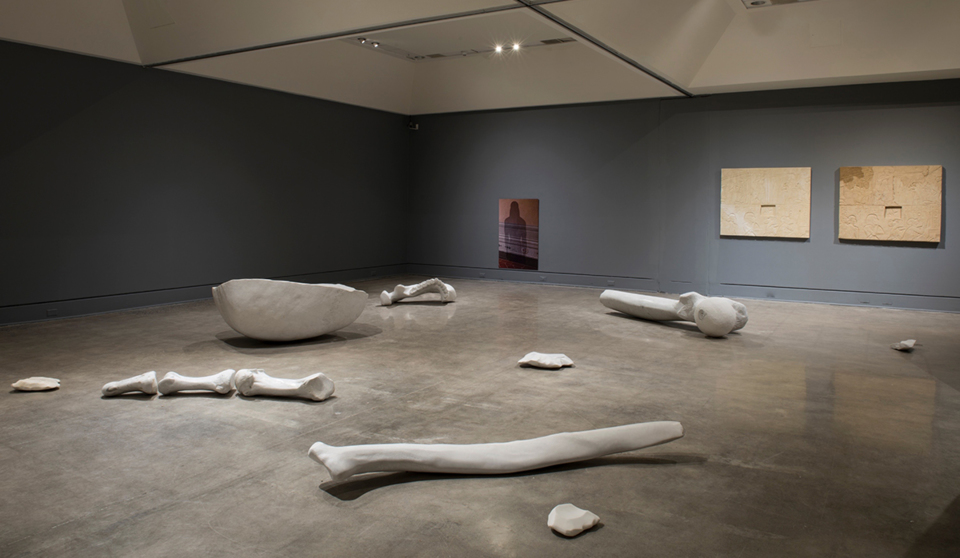
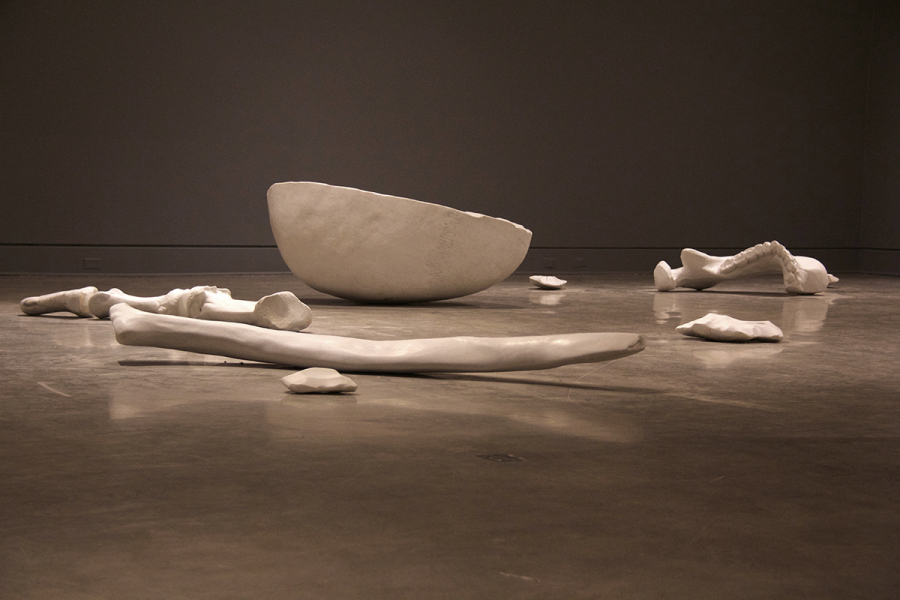
Civilization begins with a recognition that Western culture has systematically estranged us from our own bodies. We have learned to treat bones as relics — museum objects loaded with sacred or morbid significance, confined behind glass, associated with death, with the heroic dead, with the ossuary and the crypt. John Greer's proposition in this work, which he began in Pietrasanta in 1990 and completed in 1991, is precisely the opposite. The twelve marble fragments scattered across the floor of the gallery — femur, skull cap, jaw, floating rib, three sections of thumb, and five smaller chips — are not the remains of something that has ended. They are the foundations of something that has not yet finished beginning.
The conceptual starting point is at once geological and anatomical: bone is calcium carbonate. So is marble. When Greer carved these forms from Carrara marble — the same stone used for the columns
and architraves of Roman temples, the same stone that juts out of the soil of the Forum as the exposed skeleton of a buried civilisation — he was not making a metaphor. He was stating a material
fact. We are made of the same substance as the ground we walk on, the stone we have always quarried for our buildings and our monuments. We have come out of the earth, and in carving bone from
marble, Greer collapses the distance between the human body and the world's body, between the living skeleton inside us and the geological record beneath our feet. The viewer standing among these
fragments is not visiting a grave. They are being invited to recognise where they come from.
This is why the comparison Greer himself reaches for is not the ossuary but the Forum Romanum — the archaeological field in Rome where marble columns and stone architraves emerge from the soil at odd angles, not as monuments to the dead but as evidence of a living intelligence that built, and whose building is still present in the ground. What the Forum offers is not an ending but a stratigraphy: layer upon layer of human presence, each generation's constructions becoming the substrate for the next. Greer's scattered bones invoke this same temporality. They are not a corpse and they are not a giant. They are the exposed structure of what we are, brought to the surface, made visible at a scale that allows us to see them for the first time as the remarkable things they actually are.
The selection of bones is therefore not arbitrary and not elegiac. It is a precise conceptual taxonomy of what makes us human as living, active beings. The skull cap stands for mentality — the
brain-case, whose interior veining, Vanessa Paschakarnis notes in her 1999 thesis, echoes the venation of leaves, making visible the structural form of thinking potential, an energy pool that has
gone into the world. The femur represents upright mobility — the bone that lifted us off all fours, that made possible the free hand and everything the free hand would go on to build. The jaw
represents verbal communication — the bone of language, of the capacity to externalise thought and transmit it across time and between people. The three thumb bones, arranged in a loose line,
represent dexterity and industry — the opposable thumb that enabled tool use, making, the entire material history of human culture. And the floating rib — the last, lowest, unfixed rib, the one that
moves most freely with each breath — represents breath and spirit.
This last choice is the most philosophically charged and the most commonly underread. In almost every tradition that has thought seriously about what distinguishes life from non-life, breath is the
dividing line. It is what was breathed into the clay to make a person; it is what leaves at death; it is the animating principle, what the Greeks called pneuma and the Hebrews called ruach — spirit,
wind, the movement of air through a body that transforms matter into a living being. By including the rib as the seat of breath and spirit among his five conceptual bones, Greer insists that
Civilization is a work about life, not death. The structure he presents — thought, posture, language, making, breath — is the structure of a living creature in the act of being alive. The bones are
not what is left when life departs; they are what life is built around and upon.
Paschakarnis frames this precisely in her analysis: the bones function as ideas, not as images. They stand for the ordinariness of every person walking on the earth. They resist the mystification of
bones as relics of heroic acts, as museum objects confined behind glass. What Greer is offering, instead, is a celebration — John Dewey's word, which Paschakarnis cites — of the life of a
civilization, its most basic biological preconditions honoured at the scale of architecture. And this is where the architectural analogy becomes essential. The fragments are not furniture-scale,
though Greer notes that one can relate to the femur as one might to a fallen tree on which to sit. They are architectural in their spatial presence — they occupy the gallery as the columns of a Greek
temple occupy its precinct, defining a field that the body must enter and navigate. As Paschakarnis writes of the temple as sculptural proposition, it does not become part of nature, nor does it deny
the wilderness. It stands in contrast to it, and through that contrast makes both legible. Civilization operates the same way: by bringing the body's inner structure into the gallery at a scale that
estranges it just enough to be seen, it makes the ordinary extraordinary, transforms the familiar into the newly perceivable.
This spatial proposition — the viewer as participant in a field rather than observer of an object — connects Civilization directly to the Money works that would follow two decades later. In both
bodies of work, Greer is excavating the deep structures that underlie human culture: in Civilization, the biological foundations — the body that thought and stood and spoke and made and breathed; in
the Money works, the economic and intellectual systems that the thinking, standing, speaking, making body then constructed. Civilization comes first not chronologically in any narrative of decline
but foundationally in a conceptual architecture: it establishes what we are before examining what we have built with what we are.
The material logic reinforces this. In Civilization, the calcium carbonate of bone is rendered in the calcium carbonate of marble, collapsing the distinction between the organic and the geological,
between what is inside us and what the earth is made of. In the Money works, travertine — another sedimentary stone, formed by the slow accumulation of mineral deposits, often bearing the visible
traces of ancient biological life within its surface — carries the forms of archaic currencies: hides, coins, cowry shells, the pre-monetary tokens of value. In both cases the stone is not merely the
material of the work; it is the idea's body. We came from the earth and we built our systems of value from what we found there. Marble and travertine are the geological record of life itself, and to
carve human ideas — whether anatomical or economic — into that record is to insist that human culture is continuous with natural history, not separate from it.
What Civilization offers that the Money works do not, and what makes it an indispensable counterpart to them, is the affirmative ground of the whole inquiry. The Money works ask what worth meant
before money existed. Civilization asks what kind of creature needed to invent worth in the first place — and answers by placing before us the very bones that made the question possible: the brain
that could conceive of value, the jaw that could negotiate it, the thumb that could make the tokens of it, the leg that could carry them to market, and the rib that breathed the spirit into all of
it. Together they constitute not a ruin but a threshold — the biological precondition of everything that follows.
See also:
Vanessa Paschakarnis: The World in Us (Art Up On Life), 1997
"Bones of the Idea" was written in 2026 in close collaboration with Vanessa Paschakarnis.
Text developed with the assistance of AI, 2026
You can contact me directly here:
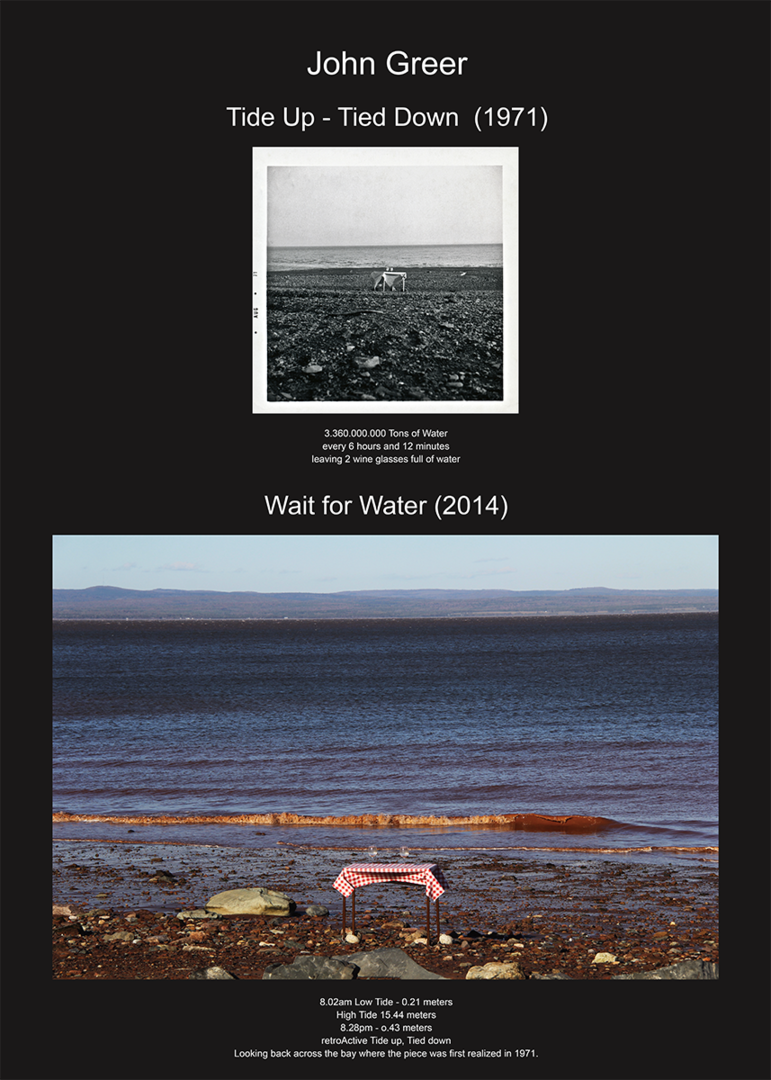
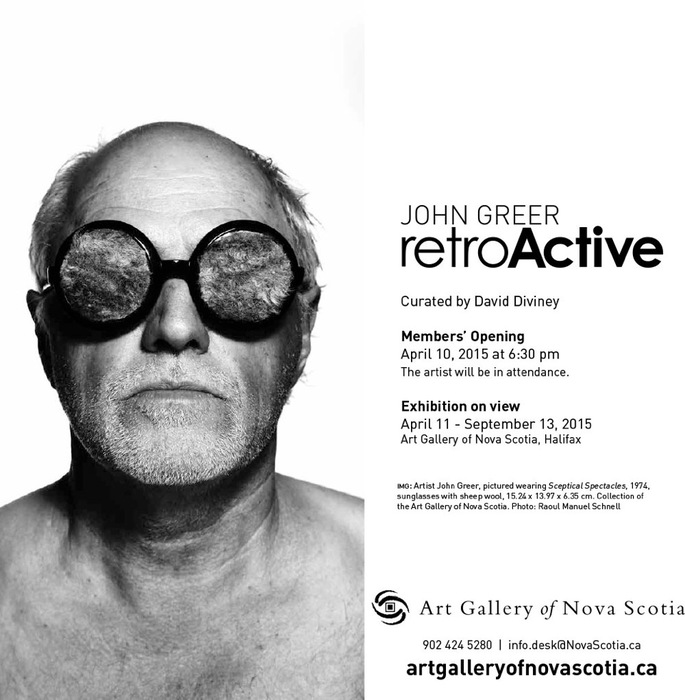
 John's retroActive book is life size.
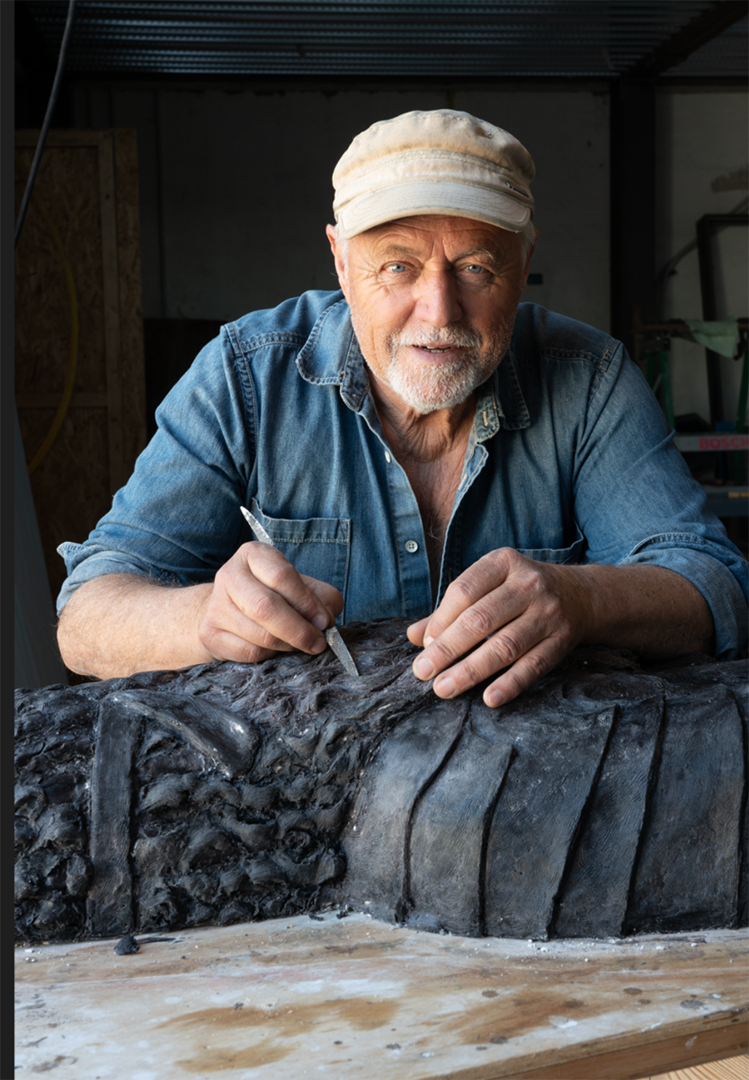
 National Gallery of Canada : THE PROUST QUESTIONNAIRE Image by Gail Skoff.
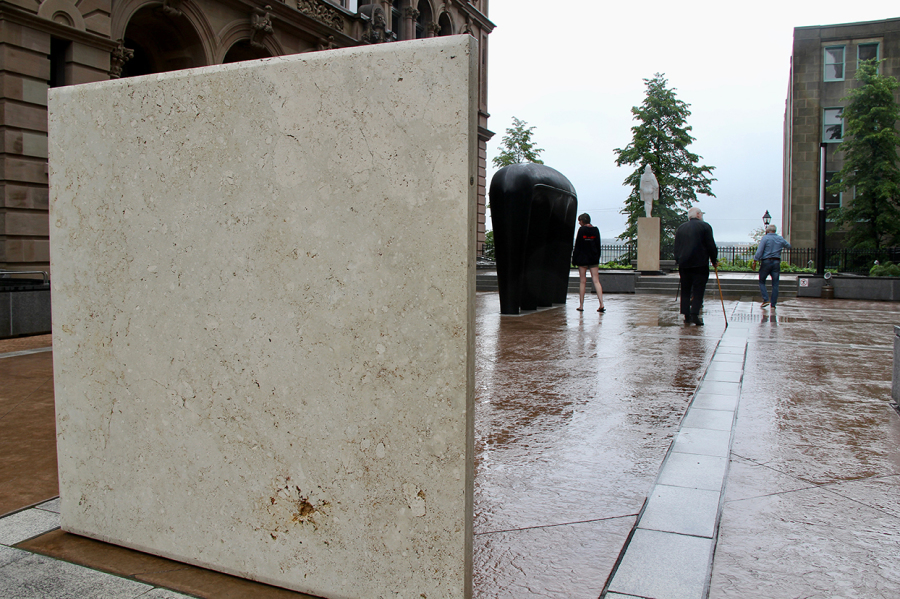
Res Ipsa Loquitur! ... is a good example of John Greer's conceptual approach to the art of stone carving. Things speak for themselves. Look around the corner: Res Ipsa Loquitur! , 2005 - 2009
 Share
Share Print
Print