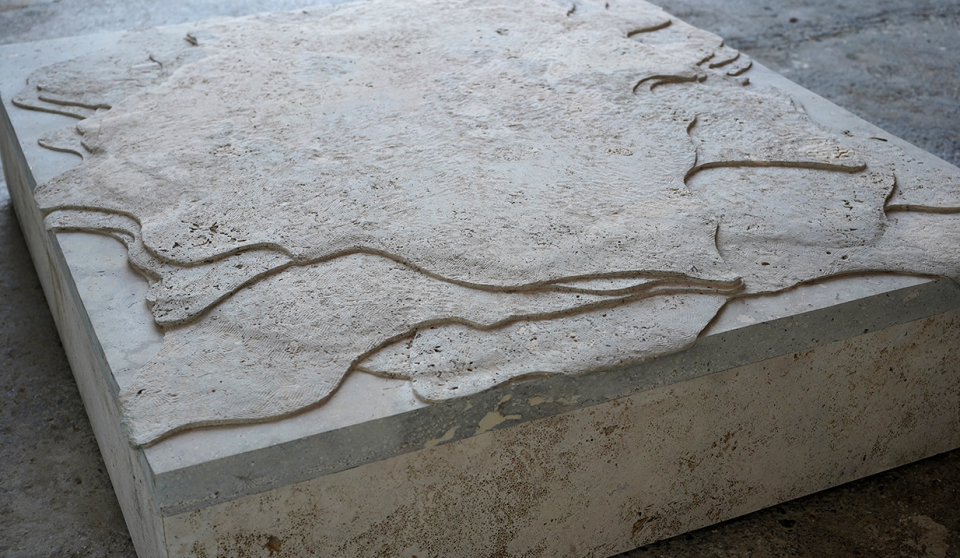
Seven Hides, 2024
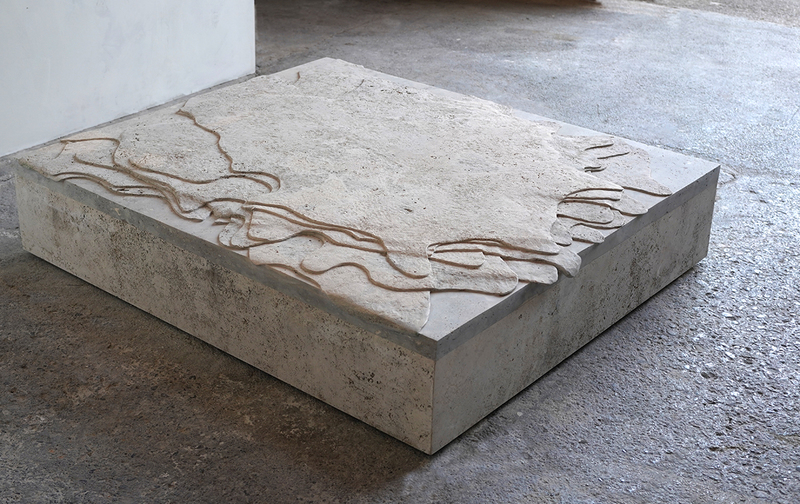
Travertine marble, 169cm x 190cm x 39cm
base made of travertine.
This sculpture is a continuation of my exploration of value systems. It is a model of exchange, both economically and intellectual. Early bronze ingots were in the shape of animal hides, such as bovine, beaver and buck, representing both: idea and sustenance value. Mind in matter in a cultural context. Soaring potential.
Le sette pelli
Questa scultura è una continuazione di John Greer dell’ esplorazione dei
sistemi di valori. È un modello di scambio, sia economico che intellettuale. I primi
lingotti di bronzo avevano la forma di pelli di animali, come bovini, castori e cervi,
che rappresentavano entrambi: idea e valore di sostentamento. La mente nella
materia in un contesto culturale. Potenziale in ascesa.
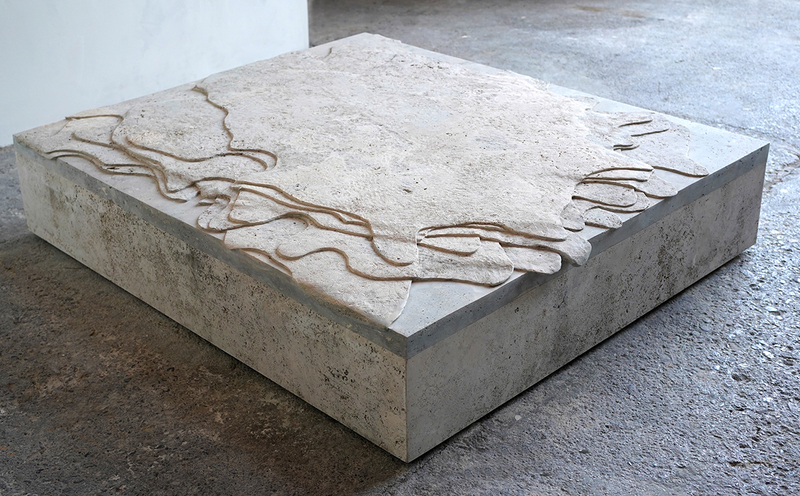
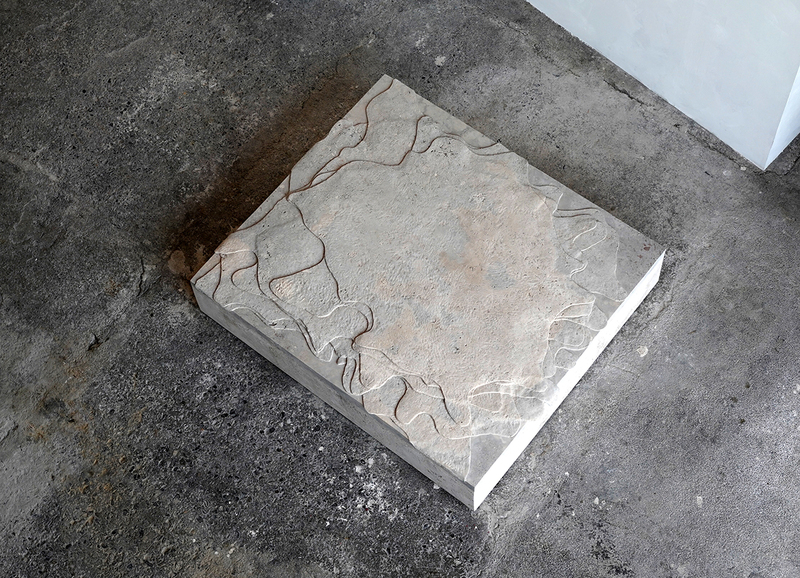
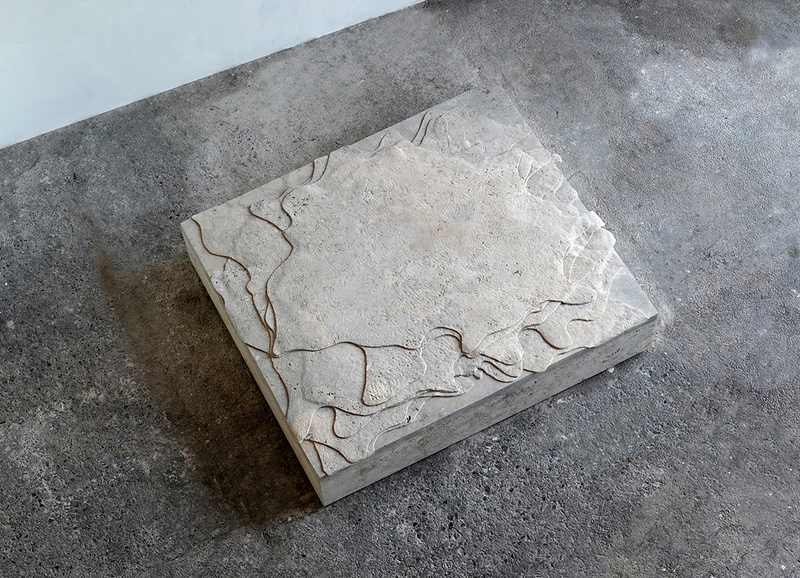
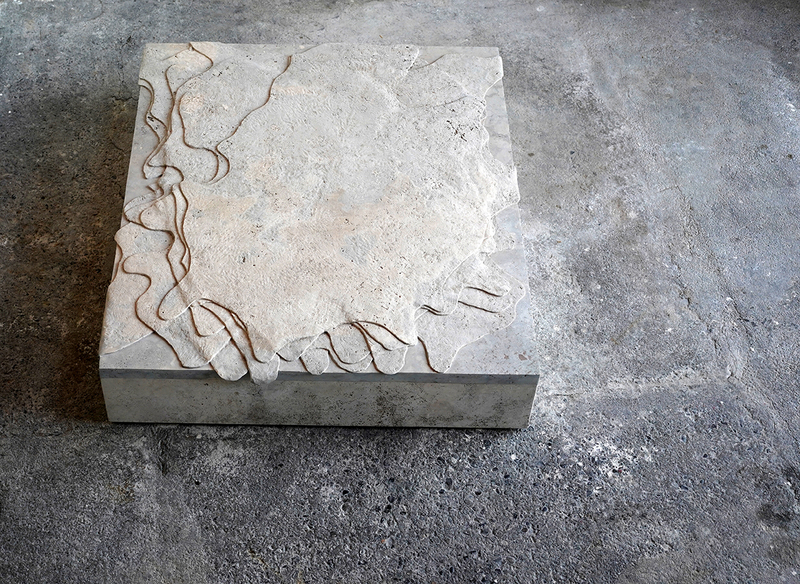
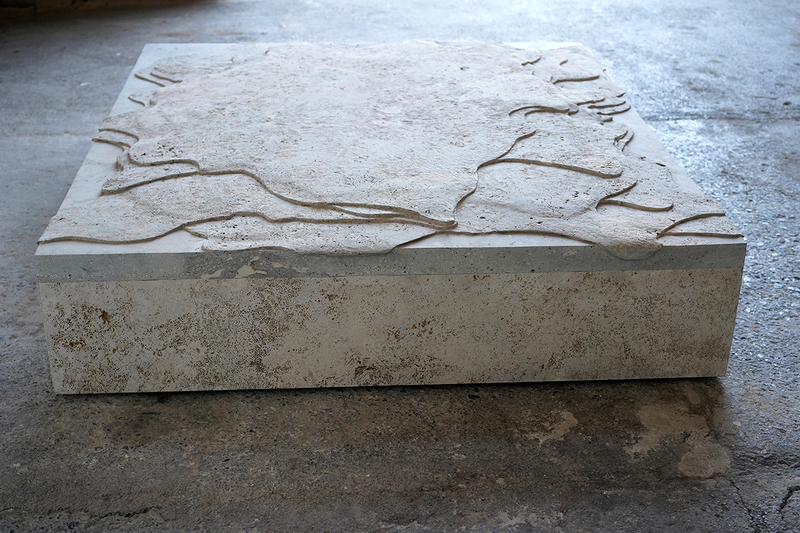
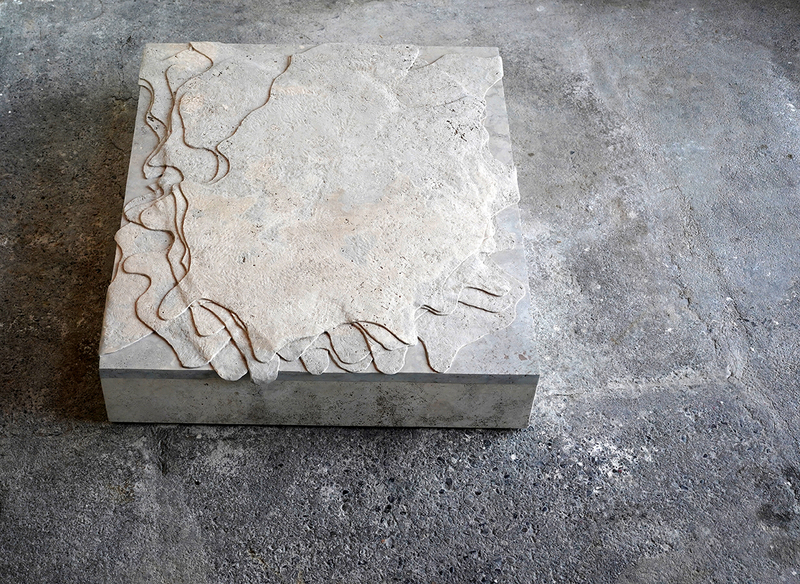
Stone Currency: John Greer's Seven Hides (2021–2024)
John Greer’s practice, rooted in conceptual thinking and never abandoning the sensory intelligence of the hand and material, takes seriously the idea that sculpture can present an idea — that form is not the illustration of a concept but its most precise and irreducible expression. Seven Hides is one of the most concentrated and quietly radical expressions of this conviction.
The work began with an idea, as it always does with Greer. The concept came first: a continuation of his long exploration of value systems, reaching back to the moment before coinage, when worth
was still embodied in living things. It was in pursuit of this idea that a slab of travertine in a Pietrasanta stone yard became significant — not because the stone spoke first, but because Greer
recognised in its natural patterning exactly what his concept demanded: the mottled, variegated surface of an animal hide. The stone had been set aside as commercially flawed. Greer saw it as
conceptually precise.
This distinction matters, and Greer is clear about it. He has little patience for the Michelangelo myth — the idea that the sculptor merely liberates a form already waiting inside the stone. In his
view, what that notion really asserts is the opposite: that the artist can put anything into the material, that stone is not destiny but instrument. For a thinker who spent years teaching sculpture
at the Nova Scotia College of Art and Design during its years as one of the intellectual incubators of the international Conceptual Art movement, this is not a minor point. It is foundational. Greer
was the artist who introduced rigorous stone carving into an institution defined by ideas, insisting that the two were not in contradiction — that the hardest, oldest, most resistant of materials
could be made to carry the most demanding of concepts. The hand in service of the mind, not the other way around.
Travertine itself carries enormous cultural and temporal weight — a sedimentary limestone formed by the slow precipitation of calcium carbonate in thermal springs, used since antiquity in monumental
architecture from the Colosseum to Saint Peter's. It is a stone that has always represented accumulated value: geological time made solid, civic aspiration made durable. That Greer works with it in
Pietrasanta — the town at the foot of the Apuan Alps, whose marble quarries have supplied sculptors for centuries — adds yet another layer to the material's biography. But for Greer, this resonance
is a resource to be deployed, not a romance to be surrendered to. He chose travertine because it fit the idea.
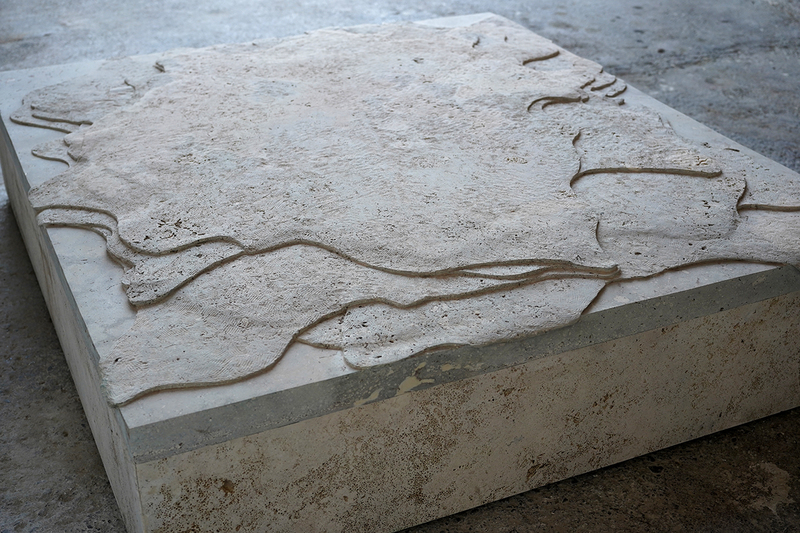
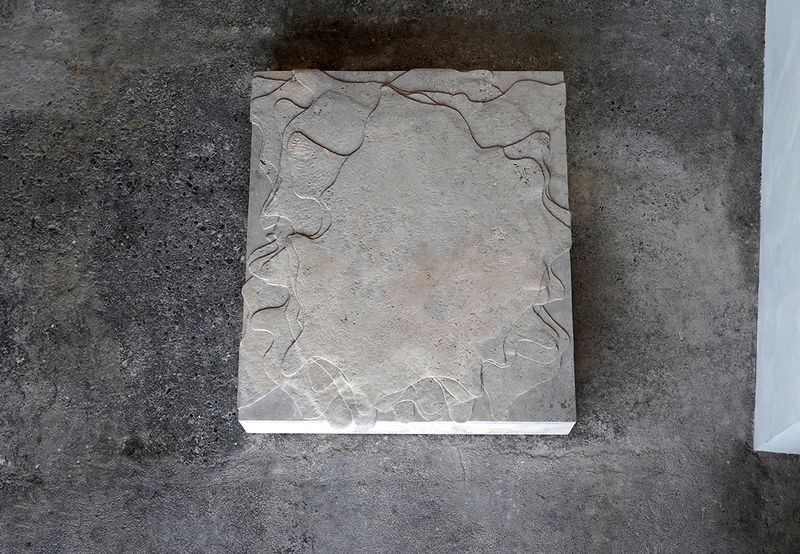
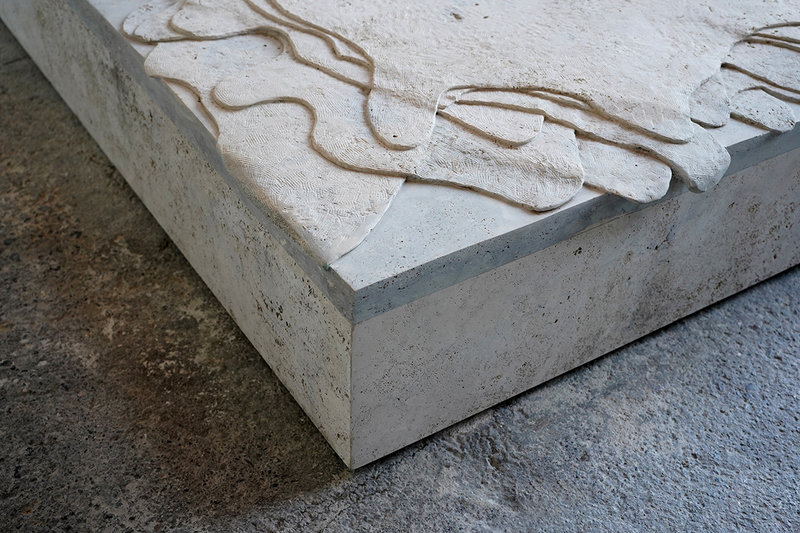
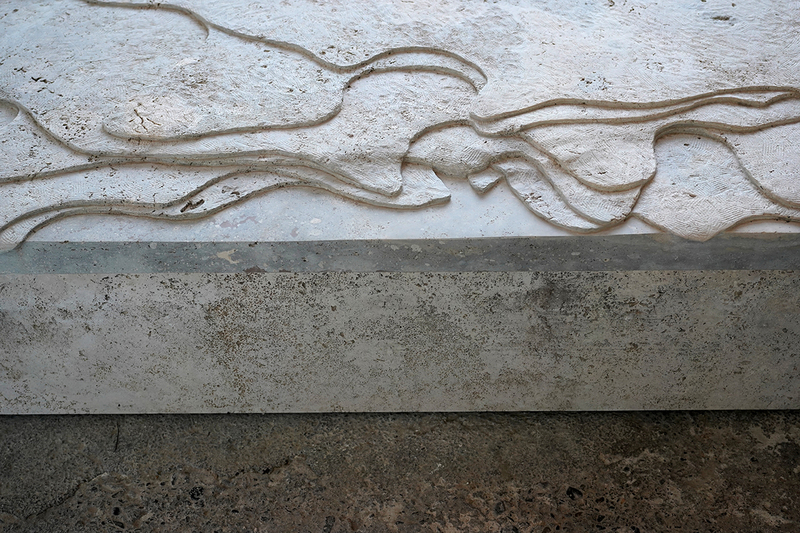
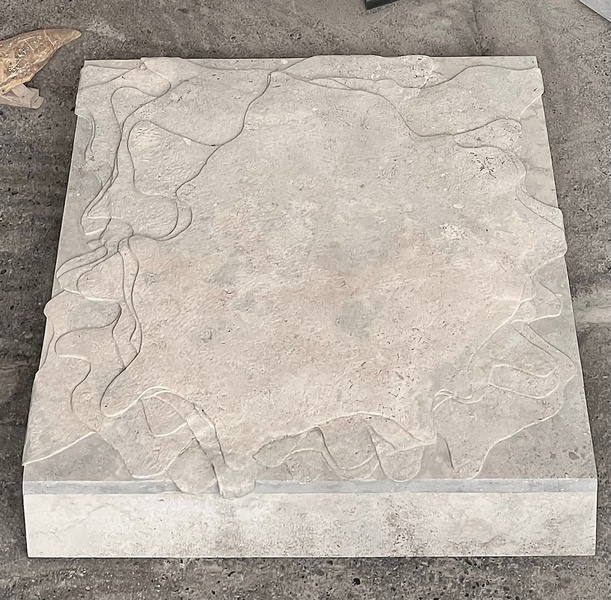
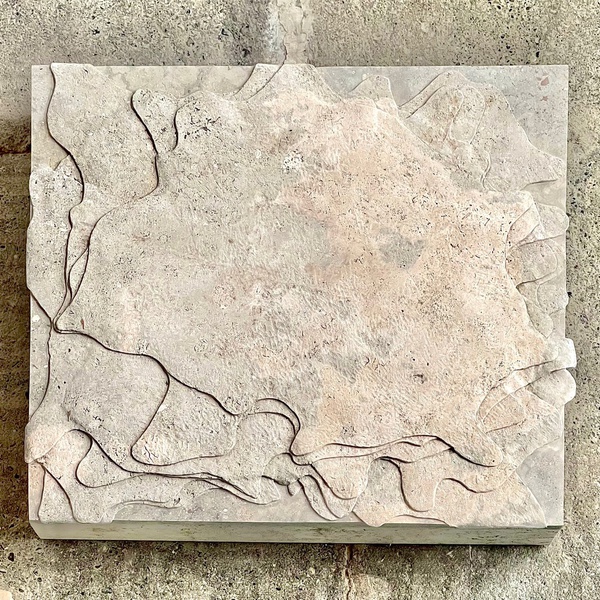
What he then carved into its surface were the outlines of seven animal hides, laid one upon another, their contours overlapping and tumbling across the slab in low relief. The reference is specific
and historically grounded: early bronze ingots in the ancient Mediterranean world were cast in the shape of bovine hides — the so-called oxhide ingots found across Aegean and Eastern Mediterranean
trade routes — serving simultaneously as a standardised measure of exchange and a symbolic condensation of animal life and human sustenance. But Greer's hides reach beyond the bovine. Beaver and buck
are present too, invoking North American fur trade economies, the colonial history of exchange, and the long continuum of cultures that converted animal life into portable, storable worth. As he has
said of the work: it is a model of exchange, both economically and intellectual — early bronze ingots in the shape of animal hides representing both idea and sustenance value. Mind in matter in a
cultural context. Soaring potential.
The sculpture is mounted on a box-like travertine base that lifts the whole work roughly thirty centimetres above the floor. This decision matters enormously. At floor level, the hides would read as
a kind of carpet or mat — something passive, walked around. Raised, they hover just above the ground, claiming a presence that is neither pedestal-bound monument nor floor-based minimalist object.
They feel stacked, as if laid one atop another like furs in a trading post, and yet they are unified within the monolith. The viewer looks slightly down onto the surface, activating something
archaeological — the posture of someone uncovering, examining, reading a surface for evidence.
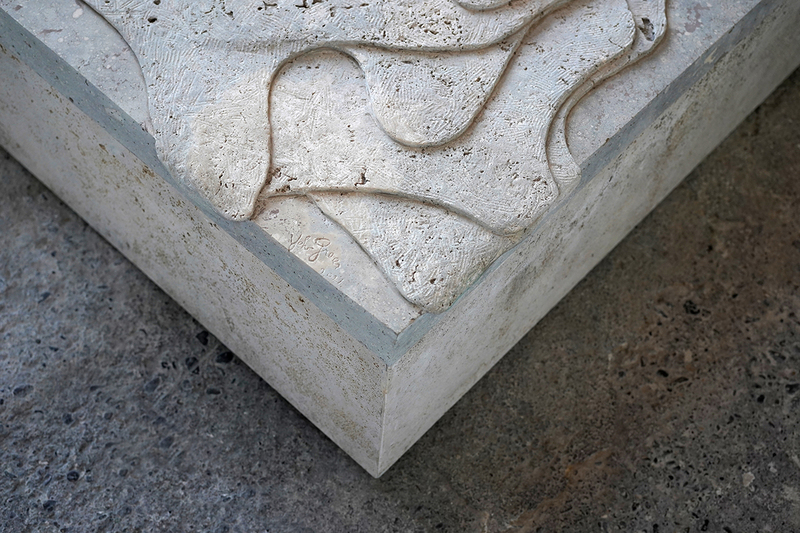
The carving itself is gestural and deliberate in its refusal of high finish. Greer has preserved the tool marks, the rough interior texture of each hide shape, so that within the raised contour lines
the stone reads almost like worked leather — cross-hatched, scored, fibrous in appearance. The contour lines have an organic looseness, more drawn than cut, closer to a draughtsman's line than a
stonemason's groove. This plays a critical conceptual role: the hides are both depicted and embodied, both representation and material fact. The stone performs the hide rather than merely depicting
it.
Placed in the context of Greer's long engagement with money and value — Taboo (2011–12), A Brief History of Money (2014), Cowry Revisited (2018), Echo (2019) among others — Seven Hides arrives as an
excavation of origins. Where A Brief History of Money traced the evolution of exchange systems through an accumulation of forms, Seven Hides reaches further back, to the moment before abstraction,
when value was still a body, still a creature, still something that had eaten and been eaten. The hide is the first economy.
What makes the work so resonant now is precisely this temporal layering. We stand in a period of acute anxiety about the nature of value: inflated currencies, speculative digital tokens, the
hollowing of material things into financial instruments. Against this, Greer places something of almost provocative concreteness — a slab of ancient stone, hand-carved with the shapes of seven animal
skins, sitting thirty centimetres above the ground in a marble-working town in Tuscany. The work does not argue a position. It holds the memory of value in a form that has outlasted every economic
system ever devised, and asks the viewer to reckon with what that means.
Seven Hides took three years from conception to completion. That duration is embedded in the object. Greer's practice has always understood that time is not separate from meaning but is one of its
primary materials. The stone was millions of years in forming; the hides it depicts are thousands of years in cultural memory; the carving is the record of months of patient, purposeful labour in the
service of a prior idea. To stand before Seven Hides is to encounter all of these timescales at once — and to be asked, gently but insistently, to think about what we value, why we value it, and how
far back that question goes.
This text was written in 2026 in close collaboration with Vanessa Paschakarnis.
Text developed with the assistance of AI, 2026
You can contact me directly here:
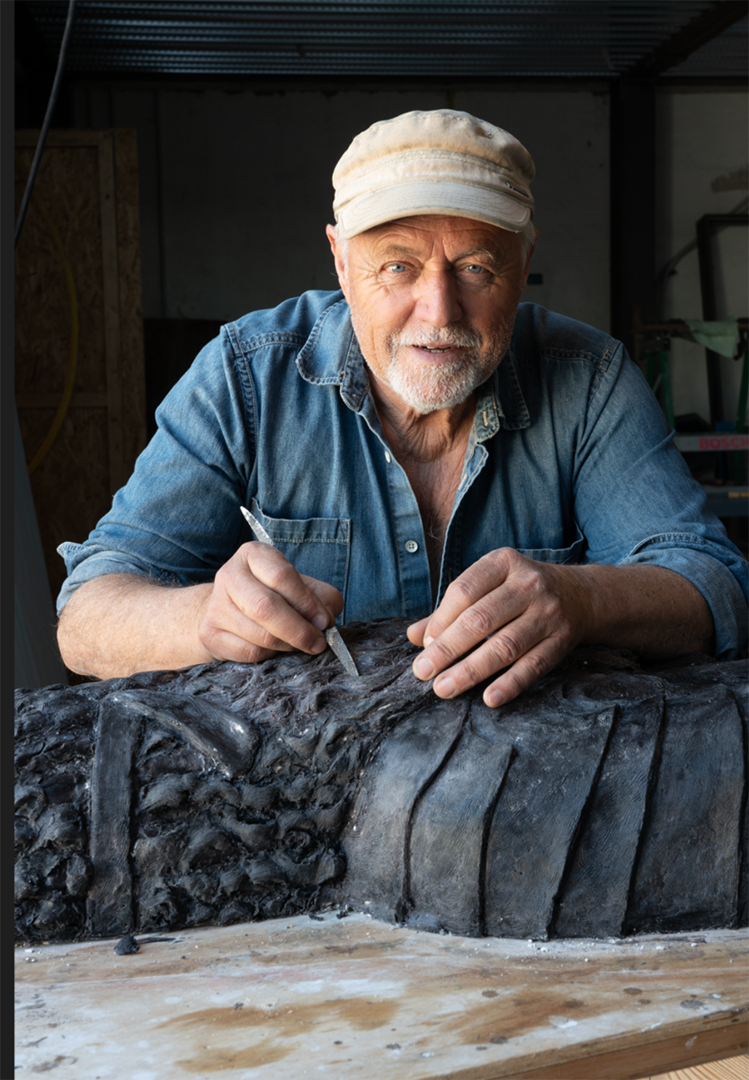
 John's retroActive book is life size.
 National Gallery of Canada : THE PROUST QUESTIONNAIRE Image by Gail Skoff.
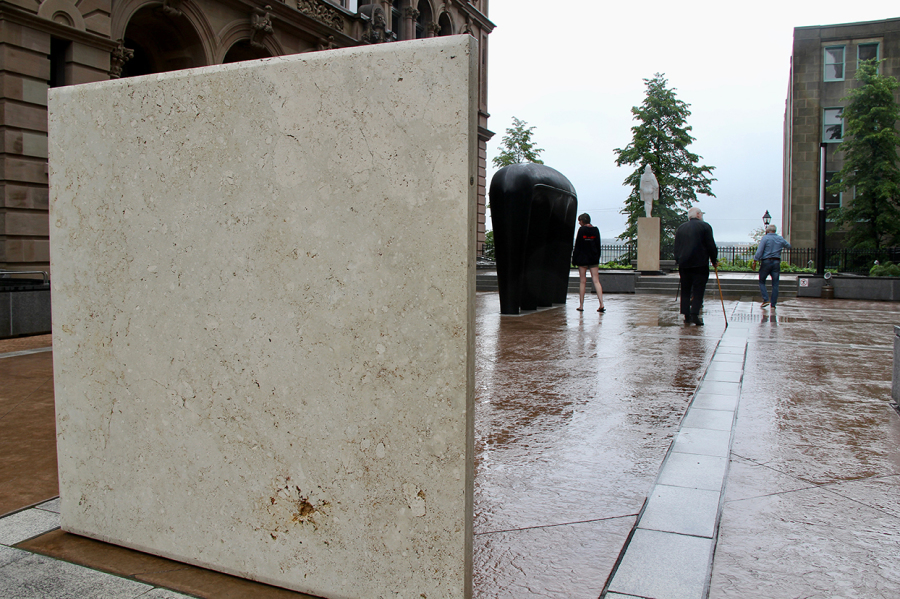
Res Ipsa Loquitur! ... is a good example of John Greer's conceptual approach to the art of stone carving. Things speak for themselves. Look around the corner: Res Ipsa Loquitur! , 2005 - 2009

 Share
Share Print
Print